Texcoat Applications
Five systems,
one supply.
The same chemistry behaves differently in a print paste, an emulsion and a masterbatch. Here is how we select and condition grades for each.
01
Textiles
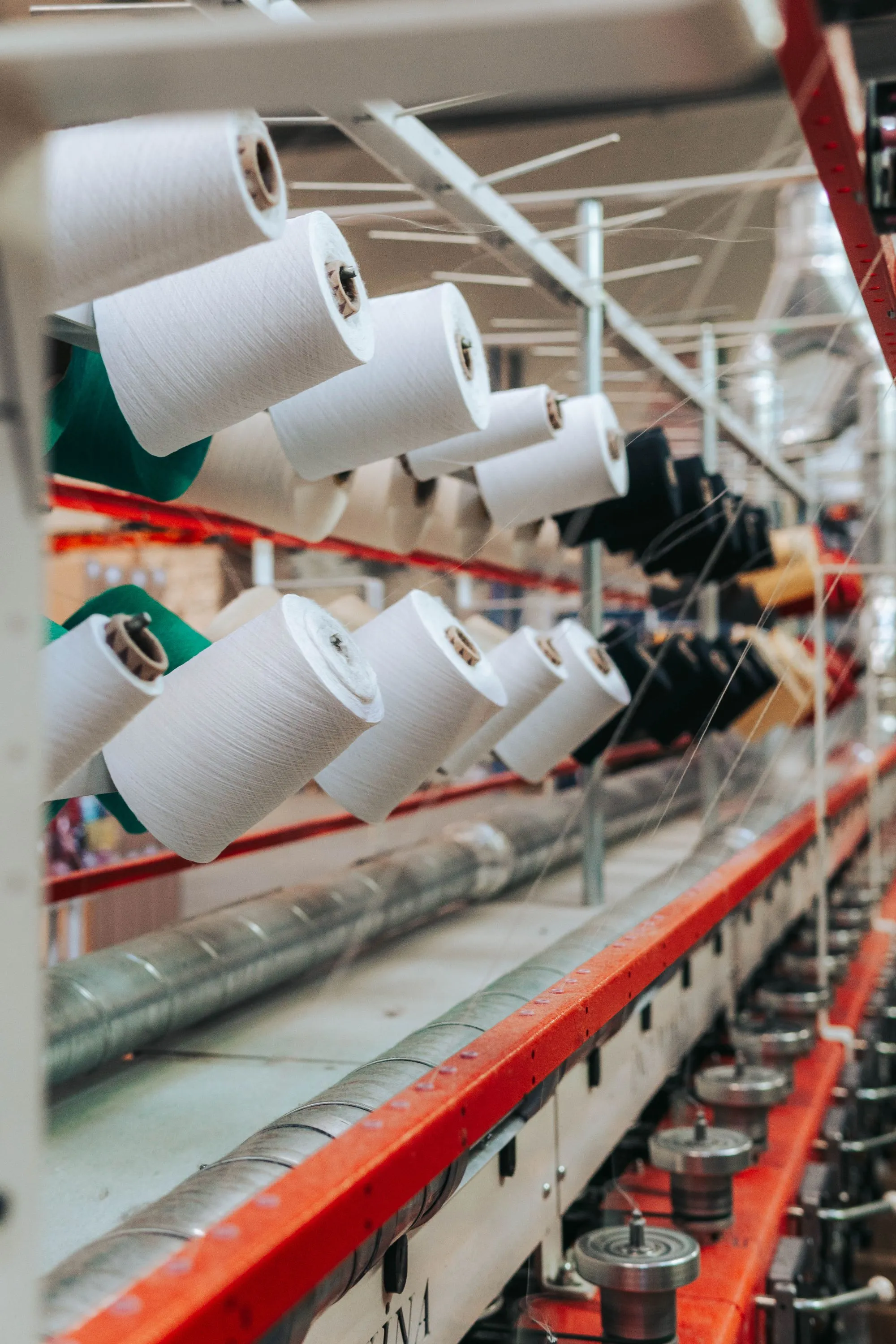
Pigment printing pastes, dope dyeing and coating systems, where the shade has to survive washing, rubbing and daylight.
Textile printing puts more demand on wash and rub fastness than on heat. Strength matters commercially: a stronger pigment means less of it per kilo of paste. Our disazo yellows and Red Lake C are the volume grades here, with quinacridone Pigment Red 122 where outdoor durability is specified.
Grades most often specified
Ask for the higher light fastness grades on anything that will see sunlight.
02
Paints & Coatings
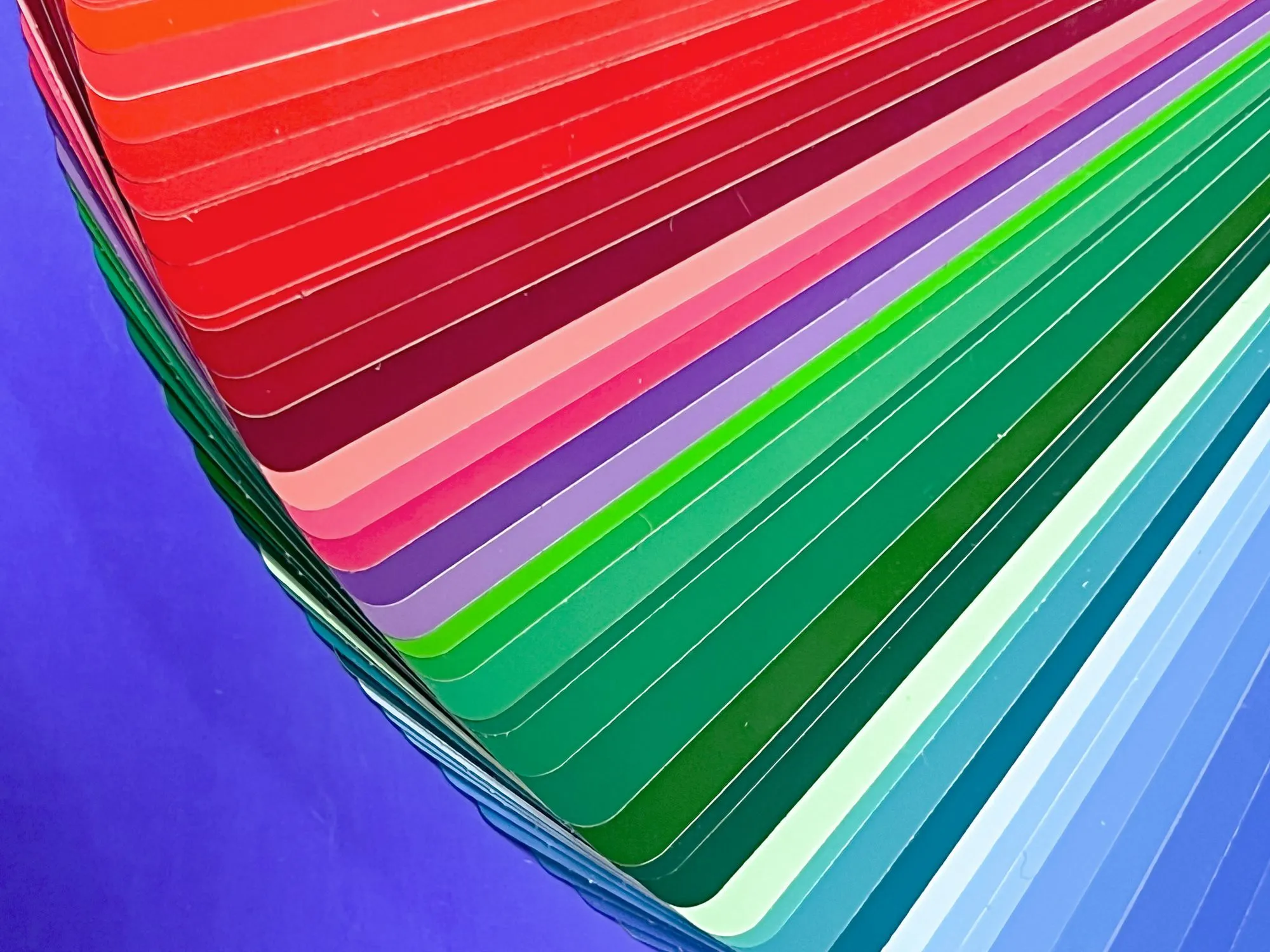
Decorative emulsions, industrial enamels and powder coatings, where dispersion behaviour has to repeat batch after batch.
Coatings live or die on dispersion. Oil absorption and particle conditioning decide how the pigment wets out and how much grinding energy it costs you. Every grade ships with its oil absorption figure so you can predict the let-down before you buy. Phthalocyanine blues and greens carry the most of this volume.
Grades most often specified
Oil absorption is published for every grade, in g per 100 g.
03
Printing Inks
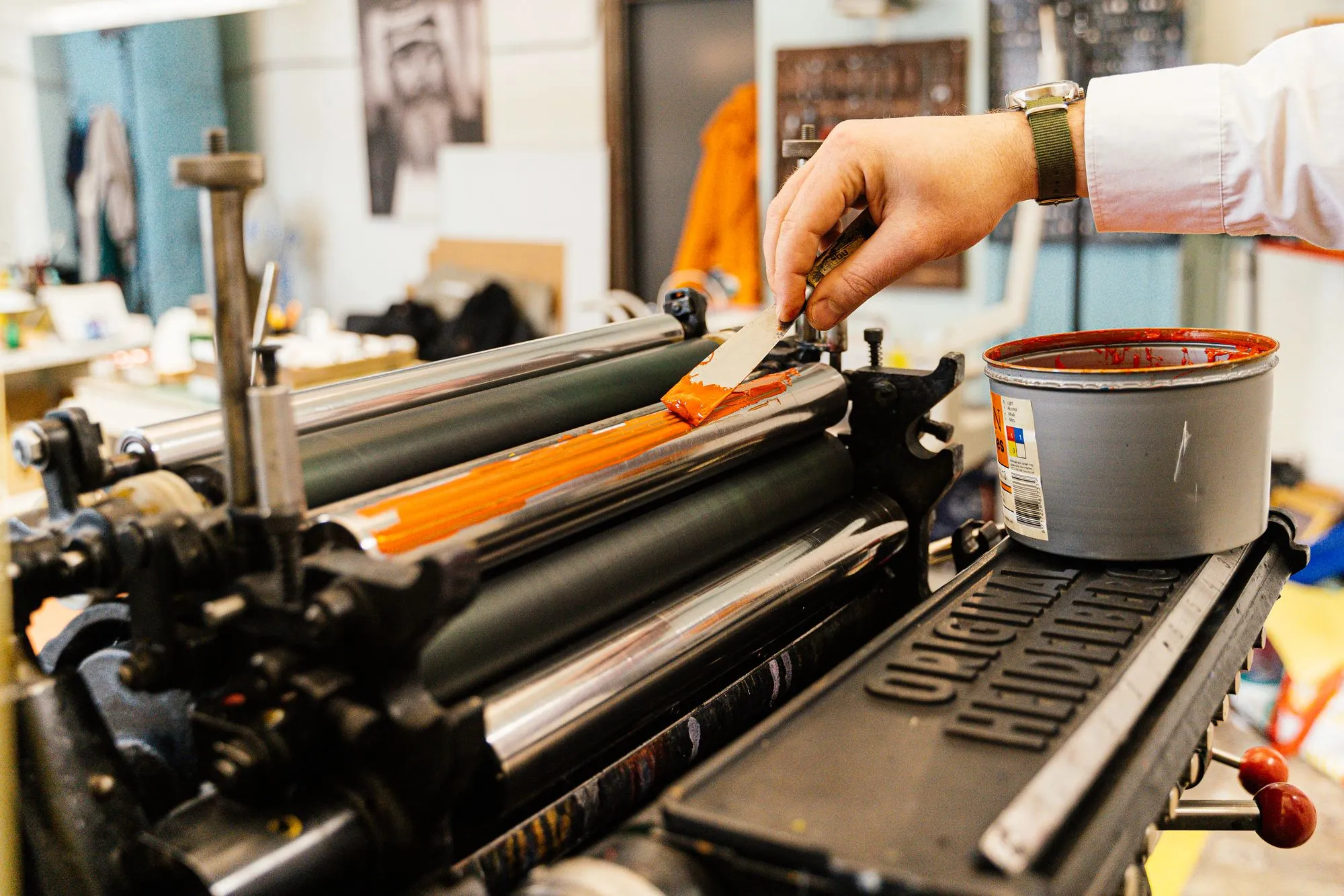
Offset, flexo, gravure and screen systems, where transparency, gloss and rheology all have to land inside a tight window.
Process inks need a pigment that holds its hue angle lot to lot, because the other three colours are not going to move to accommodate it. Pigment Blue 15:3 is the standard process cyan; Pigment Yellow 12 and 13 cover process and spot yellows; Red Lake C and Pigment Red 48:2 handle the reds and magentas.
Grades most often specified
Low conductivity below 0.5 mS cm⁻¹ across the range keeps water-based systems stable.
04
Plastics & Masterbatch
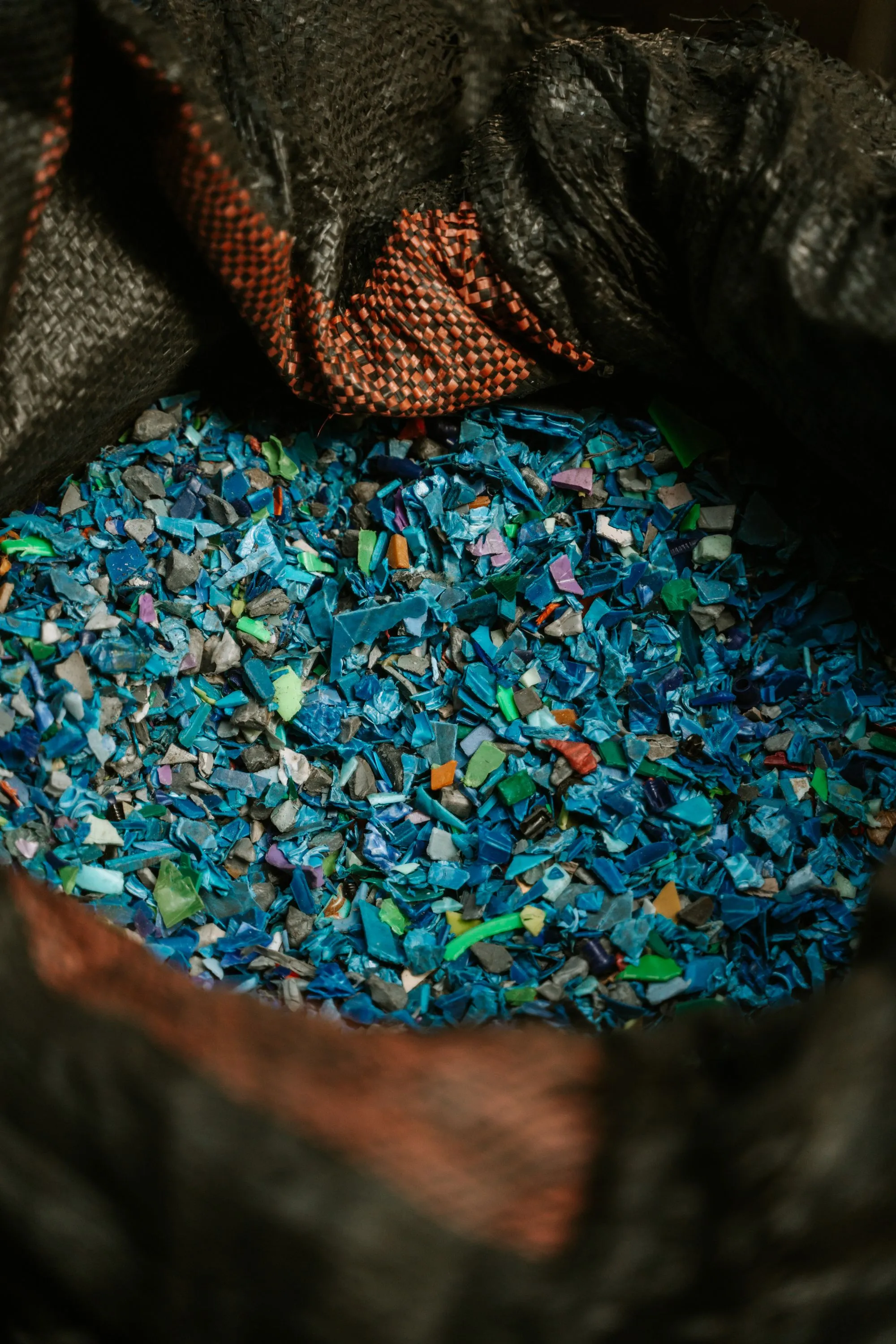
LDPE, HDPE and PP, ABS, polystyrene and PVC, where the processing temperature eliminates grades before the shade is even discussed.
This is where the heat figure decides everything. Below 200 °C the whole range is open. Above 260 °C the field narrows to the phthalocyanines, the quinacridone and dioxazine violet, with Pigment Green 7 at 300 °C the most resistant grade we make. Check the substrate table before you specify.
Grades most often specified
- Pigment Red 122280 °C
- Pigment Blue 15:0 / 15:1200 / 280 °C
- Pigment Violet 23280 °C
- Pigment Green 7300 °C
Pigment Green 7 holds to 300 °C, the highest in the range.
05
Rubber
Coloured compounds, footwear and moulded goods, where migration control and stability through vulcanisation matter more than brilliance.
Rubber compounds are chemically aggressive and often processed hot. Bleed and migration are the usual failure modes, so grade selection leans toward the lake pigments and the phthalocyanines. Every grade in our range is cleared for rubber.
Grades most often specified
- Pigment Red 48:2240 °C
- Pigment Green 7300 °C
- Pigment Blue 15:0 / 15:1200 / 280 °C
- Pigment Yellow 13260 °C
All ten grades are cleared for rubber compounds.
Not sure which grade fits your system?
Tell us the polymer or vehicle, the processing temperature and the shade you are matching. We will shortlist the grades and send samples.
- Phone
- +91 99131 33441
- info@gfcc.in
- Factory
- Plot T/26/3, G.I.D.C. SaykhaTaluka Vagra, Dist. BharuchGujarat 392140, IndiaOpen in Maps